Electric vs Manual Toothbrush: Which Cleans Your Teeth Better in 2026?
We compare plaque removal, gum health, technique, sonic vs oscillating designs, cost over time, convenience, and who benefits most so you can choose the toothbrush that fits your mouth, your habits, and your budget.
At a Glance
Choose an electric toothbrush if you want a small but research-backed edge in plaque removal and gum health, tend to brush too briefly or too hard, have limited dexterity or braces, or simply like the built-in timer and pressure sensor that keep you on track—a mid-range rechargeable model is usually all you need. Choose a manual toothbrush if you're on a tight budget, travel frequently, or already have solid technique, because a soft-bristled manual brush used properly for two minutes twice a day can still keep your mouth very healthy. In 2026, the best toothbrush is the one you'll use consistently and correctly; pair it with daily cleaning between your teeth, fluoride toothpaste, and regular dental visits, and ask your dentist which type suits your teeth and gums.
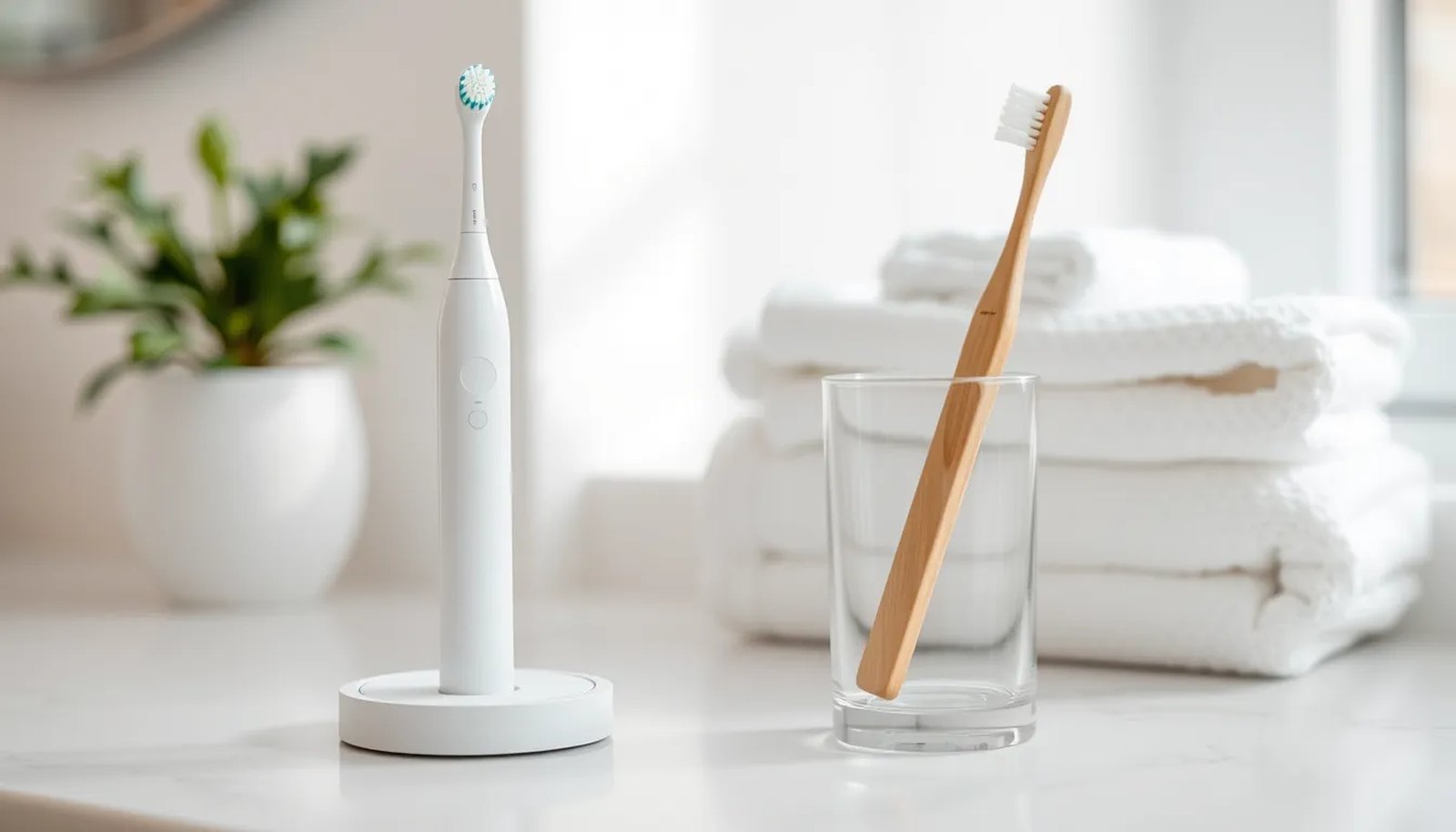
AI-generated editorial illustration; the best toothbrush is the one you use correctly twice a day—ask your dentist or dental hygienist which type and bristle style suits your teeth and gums.
Walk down any pharmacy aisle and you'll see the same choice: an inexpensive manual toothbrush or a powered brush with timers, modes, and sometimes even a smartphone app. Electric toothbrushes have become far more common in recent years, but plenty of people still wonder whether they're truly better or just a pricier gadget. The short answer is that both can keep your teeth and gums healthy. Major dental organizations, including the American Dental Association (ADA), say that manual and powered brushes can both remove plaque effectively, and both types can earn the ADA Seal of Acceptance. What changes is how much the brush helps you—and how much it depends on your own technique and habits. In this 2026 comparison, we look at what the research says about plaque and gum health, how sonic and oscillating brushes differ, the true cost over time, who benefits most from going electric, and the brushing habits that matter no matter which brush you choose.
What the Research Says
The most widely cited evidence comes from systematic reviews of randomized trials. A Cochrane review published in 2014 compared powered and manual toothbrushes across dozens of studies and found that powered brushes reduced plaque and gingivitis more than manual brushes in both the short term and after three months of use. The differences were real but modest, and the review noted that the quality of evidence varied between studies.
Longer-term observational research has pointed in the same direction. For example, a large population study from Germany that followed adults for over a decade reported that powered toothbrush users tended to have healthier gums and keep more of their teeth. Because that kind of study can't fully separate the toothbrush from other habits—such as people who buy electric brushes also visiting the dentist more often—it suggests an association rather than proving cause and effect.
The practical takeaway: on average, an electric toothbrush can give you a small edge, but a person who brushes carefully with a manual brush can still achieve excellent results.
Technique and Ease of Use
With a manual brush, technique is everything. Dentists commonly recommend holding the brush at about a 45-degree angle to the gumline, using short, gentle strokes, and covering the outer, inner, and chewing surfaces of every tooth. Many people brush for well under two minutes, miss the same areas every time, or scrub too hard.
Electric toothbrushes reduce the room for error. The head does the motion for you, so your job is to move it slowly from tooth to tooth and hold it briefly against each surface. Built-in two-minute timers and 30-second quadrant alerts help you brush long enough and evenly, and pressure sensors warn you when you're pressing too hard. For people who struggle with consistency, these features can make a meaningful difference.
Sonic vs Oscillating Electric Brushes
Electric toothbrushes come in two main designs. Rotating-oscillating brushes have a small, round head that turns back and forth rapidly and cups each tooth individually. Sonic brushes have a head shaped more like a manual brush and vibrate side to side at high frequency, which can also create fluid movement around the teeth.
Some studies have found small advantages for rotating-oscillating designs in plaque and gingivitis reduction, but both types clean well when used properly, and personal preference plays a big role. Some people find oscillating heads easier to position tooth by tooth, while others prefer the feel of a sonic brush. If you have sensitive teeth or gums, look for a gentle or sensitive mode and soft-bristled heads.
Gum Health, Sensitivity, and Brushing Too Hard
Brushing too aggressively can contribute to gum recession and wear on tooth enamel near the gumline, regardless of brush type. Hard bristles and heavy pressure are common culprits, which is why soft bristles are generally recommended.
A manual brush gives you complete control over pressure—great if you're gentle, risky if you're not. An electric brush with a pressure sensor can actively warn you to ease off, which many dentists find useful for patients who "scrub." Either way, if you notice bleeding, receding gums, or sensitivity, mention it to your dentist rather than switching brushes and hoping for the best.
Cost Over Time
A manual toothbrush costs very little, and you'll replace it every three to four months or sooner if the bristles fray, as the ADA recommends. Over a year, that's a small expense.
Electric toothbrushes range from basic battery-powered models to premium rechargeable brushes with apps and multiple modes. The handle is a one-time purchase that can last years, but replacement heads are an ongoing cost, also recommended roughly every three months. Store-brand or compatible heads can lower costs, but stick with reputable sellers so the bristles are soft and well finished. You don't need a top-tier model to get the main benefits: a mid-range rechargeable brush with a timer and pressure sensor covers what most people need.
Who Benefits Most From Going Electric
Electric toothbrushes can be especially helpful for people with arthritis, limited hand mobility, or other conditions that make precise brushing difficult. They can also help people with braces or other orthodontic appliances clean around brackets, and many kids find them more fun to use, which encourages longer brushing (children should use age-appropriate models with supervision).
Manual brushes remain a great fit if you already brush thoroughly and gently, travel often, prefer a simple low-cost option, or want to avoid charging and electronic waste. Whatever you choose, the fundamentals matter more than the brush: brush twice a day for two minutes with fluoride toothpaste, clean between your teeth daily with floss or interdental brushes, limit sugary snacks and drinks, and keep up with regular dental checkups.
Health disclaimer
This article is for general informational purposes only and is not medical or dental advice. Talk to your dentist or dental hygienist about the best brushing tools and technique for you, especially if you have gum disease, sensitive teeth, braces, implants, or other dental work.
Specifications at a Glance
| Detail | Electric Toothbrush | Manual Toothbrush |
|---|---|---|
| How it cleans | Powered head moves on its own—either rotating-oscillating (small round head) or sonic (high-frequency side-to-side vibration) | You provide all of the motion with short, gentle strokes |
| Plaque and gum results | Research reviews suggest modestly better plaque and gingivitis reduction than manual brushing on average | Very effective when technique, timing, and consistency are good |
| Technique needed | Less scrubbing; you guide the head slowly over each tooth and let it do the work | Higher; results depend on angle, pressure, coverage, and brushing for the full two minutes |
| Helpful features | Built-in two-minute timers, quadrant pacers, pressure sensors, multiple modes, and app coaching on some models | Wide choice of head sizes and bristle styles; soft bristles are generally recommended |
| Upfront cost | Moderate to high depending on model, plus replacement heads | Very low |
| Ongoing cost | Replacement brush heads roughly every three months, plus charging or batteries | Replace the whole brush roughly every three to four months, or sooner if bristles fray |
| Portability | Bulkier; needs charging, though many models last a week or more per charge | Light, compact, no charging, ideal for travel |
| Best for | People with limited dexterity or arthritis, braces wearers, kids who need motivation, and anyone who tends to brush too hard or too briefly | Budget-conscious brushers, travel, and people who already brush thoroughly with good technique |
Published article details, not a live feed. A dash means the article does not record that detail. On small screens, scroll the table horizontally.
Key differences in recorded specifications
- How it cleans
- Electric Toothbrush: Powered head moves on its own—either rotating-oscillating (small round head) or sonic (high-frequency side-to-side vibration); Manual Toothbrush: You provide all of the motion with short, gentle strokes.
- Plaque and gum results
- Electric Toothbrush: Research reviews suggest modestly better plaque and gingivitis reduction than manual brushing on average; Manual Toothbrush: Very effective when technique, timing, and consistency are good.
- Technique needed
- Electric Toothbrush: Less scrubbing; you guide the head slowly over each tooth and let it do the work; Manual Toothbrush: Higher; results depend on angle, pressure, coverage, and brushing for the full two minutes.
- Helpful features
- Electric Toothbrush: Built-in two-minute timers, quadrant pacers, pressure sensors, multiple modes, and app coaching on some models; Manual Toothbrush: Wide choice of head sizes and bristle styles; soft bristles are generally recommended.
- Upfront cost
- Electric Toothbrush: Moderate to high depending on model, plus replacement heads; Manual Toothbrush: Very low.
- Ongoing cost
- Electric Toothbrush: Replacement brush heads roughly every three months, plus charging or batteries; Manual Toothbrush: Replace the whole brush roughly every three to four months, or sooner if bristles fray.
- Portability
- Electric Toothbrush: Bulkier; needs charging, though many models last a week or more per charge; Manual Toothbrush: Light, compact, no charging, ideal for travel.
- Best for
- Electric Toothbrush: People with limited dexterity or arthritis, braces wearers, kids who need motivation, and anyone who tends to brush too hard or too briefly; Manual Toothbrush: Budget-conscious brushers, travel, and people who already brush thoroughly with good technique.
Similarities in recorded specifications
No identical values are recorded for matching specification labels.
These observations compare matching labels and exact published values only; they do not establish equivalent test conditions or a performance advantage.
Pros, cons, and criterion-level evidence
Consider the specifications and verdict in light of your priorities.
No numeric score is assigned. The verdict below is supplied editorial guidance, not a universal ranking.
The Verdict
Choose an electric toothbrush if you want a small but research-backed edge in plaque removal and gum health, tend to brush too briefly or too hard, have limited dexterity or braces, or simply like the built-in timer and pressure sensor that keep you on track—a mid-range rechargeable model is usually all you need. Choose a manual toothbrush if you're on a tight budget, travel frequently, or already have solid technique, because a soft-bristled manual brush used properly for two minutes twice a day can still keep your mouth very healthy. In 2026, the best toothbrush is the one you'll use consistently and correctly; pair it with daily cleaning between your teeth, fluoride toothpaste, and regular dental visits, and ask your dentist which type suits your teeth and gums.
Sources and methodology
Publication date: October 7, 2026. Prices and specifications are not live; check current details before deciding.
- Cochrane Review (Yaacob et al., 2014) – Powered versus manual toothbrushing for oral health (PubMed 24934383) · Accessed: 2026-10-09
Powered brushes reduced plaque and gingivitis more than manual in short and longer term (3+ months); supports the Cochrane paragraph.
- Pitchika et al., J Clin Periodontol 2019 – 11-year SHIP cohort (PubMed 31115952) · Accessed: 2026-10-09
German population study: powered-brush users had less periodontal progression and ~20% less tooth loss over 11 years (observational).
- European Federation of Periodontology – Using an electric toothbrush helps prevent tooth loss · Accessed: 2026-10-09
Plain-language summary of the SHIP cohort findings.
- ADA – Toothbrushes (Oral Health Topics) · Accessed: 2026-10-09
ADA recommends replacing toothbrushes every 3–4 months or sooner if bristles fray; soft bristles.
Editorial context: Read the editorial policy.
Frequently asked questions
- Should I choose Electric Toothbrush or Manual Toothbrush?
- Choose an electric toothbrush if you want a small but research-backed edge in plaque removal and gum health, tend to brush too briefly or too hard, have limited dexterity or braces, or simply like the built-in timer and pressure sensor that keep you on track—a mid-range rechargeable model is usually all you need. Choose a manual toothbrush if you're on a tight budget, travel frequently, or already have solid technique, because a soft-bristled manual brush used properly for two minutes twice a day can still keep your mouth very healthy. In 2026, the best toothbrush is the one you'll use consistently and correctly; pair it with daily cleaning between your teeth, fluoride toothpaste, and regular dental visits, and ask your dentist which type suits your teeth and gums.
- How do Electric Toothbrush and Manual Toothbrush compare on how it cleans?
- Electric Toothbrush: Powered head moves on its own—either rotating-oscillating (small round head) or sonic (high-frequency side-to-side vibration). Manual Toothbrush: You provide all of the motion with short, gentle strokes. These are the article's stated details; verify current specifications before deciding.
- When was this comparison published, and are its prices live?
- Published October 7, 2026. Prices and specifications in this article are not a live feed. Check the provider's current information. Available sources are listed on this page.