Heat Pump vs Gas Furnace: Which Heats Your Home Better in 2026?
We compare upfront cost, running costs, cold-climate performance, comfort, lifespan, maintenance, and incentives so you can pick the heating system that fits your climate, your energy prices, and your budget.
At a Glance
Choose a heat pump if you live in a mild to moderately cold climate, need new air conditioning as well as heating, are moving away from propane, oil, or electric baseboard heat, or want a single efficient system with no combustion in the home—especially if local rebates help with the upfront cost. Choose a gas furnace if you live somewhere with long, severe winters, have inexpensive natural gas and existing ductwork, and want the lowest upfront cost for a like-for-like replacement. In 2026, many homeowners in colder regions get the best of both with a dual fuel system. Whatever you choose, start with a proper load calculation, compare quotes using your real utility rates, and check state and utility incentives before you sign.
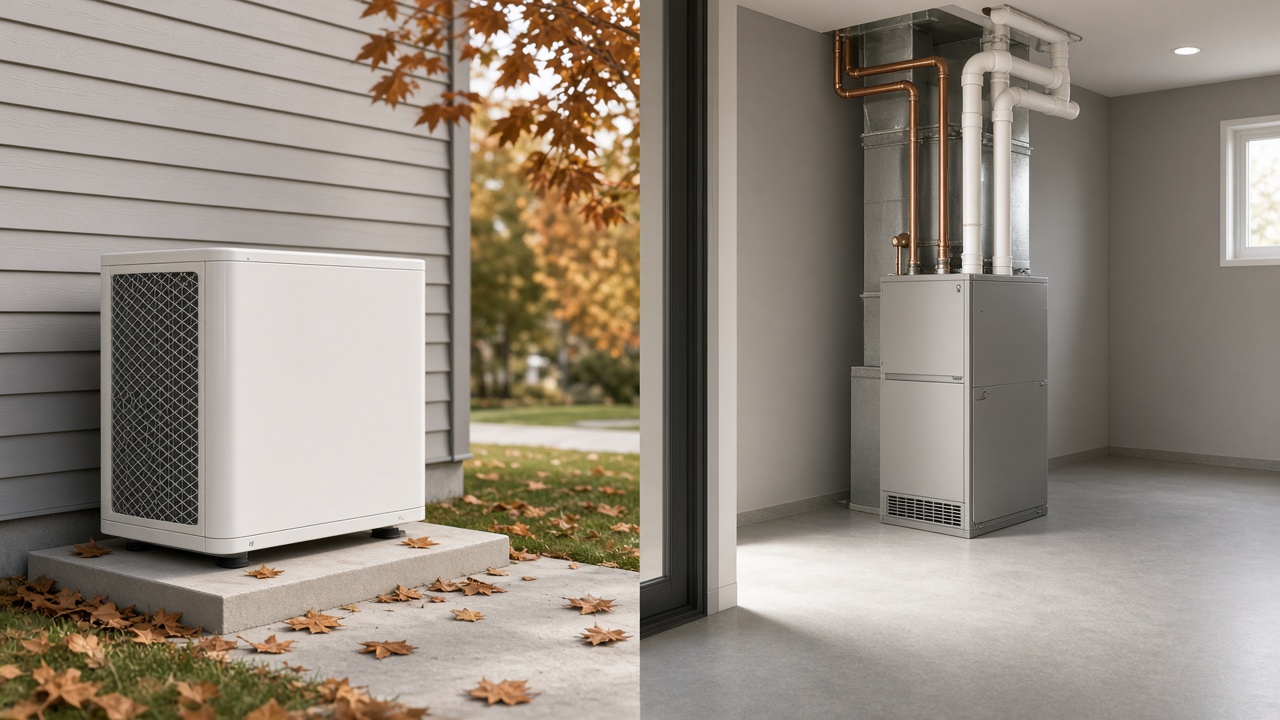
AI-generated editorial illustration; installation costs, energy prices, and available rebates vary widely by region and home—get multiple quotes and a proper load calculation before choosing.
For decades the gas furnace was the default way to heat a home in much of North America and Europe: reliable, powerful, and relatively cheap to run. Heat pumps have changed that conversation. Today's systems can heat and cool from a single unit, run on electricity, and—thanks to big improvements in cold-climate technology—work in places where they once struggled. Still, a heat pump isn't automatically the better choice. The right answer depends on your climate, your local electricity and gas prices, whether you need new air conditioning, the condition of your ductwork, and how much you can spend upfront. Incentives have also shifted: in the United States, the federal energy-efficiency tax credit for heat pumps ended for systems installed after 2025, so state, local, and utility rebates now matter more. This comparison walks through how each system works, what it costs to buy and run, how it performs when temperatures plunge, comfort and maintenance differences, and when a hybrid "dual fuel" setup makes sense—so you can make a confident, numbers-based decision.
How Heat Pumps and Furnaces Work
A gas furnace creates heat by burning fuel. A burner heats a metal heat exchanger, and a blower pushes air across it and through your ducts. Because it generates heat directly, a furnace's efficiency can never exceed 100%; the best condensing models get close, with AFUE ratings in the mid-to-high 90s.
A heat pump doesn't create heat—it moves it. Using a refrigerant cycle like a refrigerator running in reverse, it pulls heat from outdoor air (even cold air contains usable heat) and releases it inside. Because moving heat takes less energy than generating it, a heat pump can deliver two to four times more heat energy than the electricity it consumes in moderate weather. In summer, the cycle reverses and the same equipment works as an air conditioner.
That core difference explains most of the trade-offs: heat pumps shine on efficiency and versatility, while furnaces shine on raw output in extreme cold.
Upfront Cost and Installation
If you already have a working gas line and ducts, replacing an old furnace with a new one is usually the cheapest upfront option. Installing a heat pump typically costs more, and cold-climate models or ductless mini-split systems for multiple rooms cost more still. Homes with older electrical panels may also need an upgrade to support a heat pump and backup heat.
The math changes if your air conditioner is also near the end of its life. Because a heat pump replaces both a furnace's heating role and a central AC, comparing a heat pump to a "furnace plus new AC" package often narrows or even closes the price gap.
Incentives can matter a lot. While the U.S. federal heat pump tax credit no longer applies to installations after 2025, many states, cities, and utilities still offer rebates, low-interest financing, or special electric rates for heat pump owners. Check your utility's website and state energy office before getting quotes, and ask installers which programs they participate in.
Running Costs: Electricity vs Gas Prices
Operating cost is where local prices decide the winner. A heat pump's high efficiency means it uses relatively little energy, but that energy is electricity, which typically costs more per unit of energy than natural gas. Where electricity is moderately priced and winters are mild to moderate, heat pumps often cost less to run than gas furnaces. Where electricity is expensive and gas is cheap, a high-efficiency furnace can still win on monthly bills.
Propane and heating oil homes are a different story: those fuels are often expensive, so switching to a heat pump frequently cuts heating costs significantly. Also remember fixed charges. If a heat pump lets you disconnect from gas entirely (including water heating and cooking), you can drop your monthly gas connection fee, which improves the savings.
The best way to compare is to use your actual utility rates. Many utilities and energy agencies offer calculators, and a good installer should estimate annual operating costs for both options based on your home's heat loss.
Cold-Climate Performance and Comfort
Older heat pumps earned a reputation for struggling below freezing. Modern cold-climate heat pumps with variable-speed (inverter) compressors are far more capable and can keep heating at temperatures well below freezing, though output and efficiency drop as it gets colder. In very cold regions, systems are often paired with electric resistance backup strips or a furnace for the coldest days.
Comfort feels different, too. A furnace delivers bursts of very warm air, heating the house quickly and then shutting off. A variable-speed heat pump runs longer at lower output, delivering steadier, gentler warmth with fewer temperature swings—some people love it, while others miss the toasty blast from the vents. Heat pumps also handle dehumidification well in summer since they double as air conditioners.
Sizing is critical for both systems. Insist on a proper heat-load calculation (often called a Manual J in the U.S.) rather than a rule-of-thumb guess, and consider improving insulation and air sealing, which lowers the size and cost of any system you buy.
Maintenance, Lifespan, and Safety
Service life depends on equipment, installation, operating conditions, and maintenance. Follow the manufacturer’s maintenance schedule.
Safety is a meaningful distinction. Burning gas creates combustion byproducts, so furnaces require proper venting and working carbon monoxide detectors, and a cracked heat exchanger can be dangerous. Heat pumps involve no combustion in the home, eliminating carbon monoxide risk from the heating system itself. Either way, use a licensed, reputable installer.
The Middle Ground: Dual Fuel Systems
You don't always have to choose. A dual fuel (hybrid) system pairs a heat pump with a gas furnace. The heat pump handles heating during mild and moderate weather when it's most efficient, and the furnace takes over automatically when outdoor temperatures drop below a set point or when gas becomes the cheaper option.
Dual fuel can make sense in cold climates with cheap gas, for homeowners who want to cut emissions and bills without giving up the reassurance of combustion heat, or when an existing furnace is still in good shape and only the AC needs replacing. The trade-off is more equipment to buy and maintain, and you keep paying for a gas connection.
Specifications at a Glance
| Detail | Air-Source Heat Pump | Gas Furnace |
|---|---|---|
| How it heats | Moves heat from outdoor air into your home using electricity and refrigerant; runs in reverse for cooling | Burns natural gas (or propane) and blows the heated air through ducts |
| Efficiency | Often delivers 2–4 units of heat per unit of electricity in mild to moderate weather; efficiency drops as it gets colder | High-efficiency condensing models convert roughly 90–98% of fuel energy into heat (AFUE rating) |
| Cooling included | Yes, one system handles heating and air conditioning | No; needs a separate air conditioner for cooling |
| Cold-climate performance | Modern cold-climate models can keep heating well below freezing; very low temperatures may need backup heat | Consistent, very hot supply air no matter how cold it gets outside |
| Upfront cost | Usually higher than a furnace alone, especially for cold-climate or ductless multi-zone systems | Usually lower to replace an existing furnace with ductwork and gas line already in place |
| Running cost | Often lower where electricity prices are moderate relative to gas; can be higher where electricity is expensive | Often lower where natural gas is cheap; exposed to gas price swings and fixed gas connection fees |
| Lifespan | Varies by equipment, use, and maintenance | Varies by equipment, use, and maintenance |
| Best for | Mild to moderately cold climates, homes needing new AC too, and households cutting fossil-fuel use | Very cold climates, homes with cheap natural gas, and owners who just need a like-for-like replacement |
Published article details, not a live feed. A dash means the article does not record that detail. On small screens, scroll the table horizontally.
Key differences in recorded specifications
- How it heats
- Air-Source Heat Pump: Moves heat from outdoor air into your home using electricity and refrigerant; runs in reverse for cooling; Gas Furnace: Burns natural gas (or propane) and blows the heated air through ducts.
- Efficiency
- Air-Source Heat Pump: Often delivers 2–4 units of heat per unit of electricity in mild to moderate weather; efficiency drops as it gets colder; Gas Furnace: High-efficiency condensing models convert roughly 90–98% of fuel energy into heat (AFUE rating).
- Cooling included
- Air-Source Heat Pump: Yes, one system handles heating and air conditioning; Gas Furnace: No; needs a separate air conditioner for cooling.
- Cold-climate performance
- Air-Source Heat Pump: Modern cold-climate models can keep heating well below freezing; very low temperatures may need backup heat; Gas Furnace: Consistent, very hot supply air no matter how cold it gets outside.
- Upfront cost
- Air-Source Heat Pump: Usually higher than a furnace alone, especially for cold-climate or ductless multi-zone systems; Gas Furnace: Usually lower to replace an existing furnace with ductwork and gas line already in place.
- Running cost
- Air-Source Heat Pump: Often lower where electricity prices are moderate relative to gas; can be higher where electricity is expensive; Gas Furnace: Often lower where natural gas is cheap; exposed to gas price swings and fixed gas connection fees.
- Best for
- Air-Source Heat Pump: Mild to moderately cold climates, homes needing new AC too, and households cutting fossil-fuel use; Gas Furnace: Very cold climates, homes with cheap natural gas, and owners who just need a like-for-like replacement.
Similarities in recorded specifications
- Lifespan
- Air-Source Heat Pump and Gas Furnace: Varies by equipment, use, and maintenance.
These observations compare matching labels and exact published values only; they do not establish equivalent test conditions or a performance advantage.
Pros, cons, and criterion-level evidence
Consider the specifications and verdict in light of your priorities.
No numeric score is assigned. The verdict below is supplied editorial guidance, not a universal ranking.
The Verdict
Choose a heat pump if you live in a mild to moderately cold climate, need new air conditioning as well as heating, are moving away from propane, oil, or electric baseboard heat, or want a single efficient system with no combustion in the home—especially if local rebates help with the upfront cost. Choose a gas furnace if you live somewhere with long, severe winters, have inexpensive natural gas and existing ductwork, and want the lowest upfront cost for a like-for-like replacement. In 2026, many homeowners in colder regions get the best of both with a dual fuel system. Whatever you choose, start with a proper load calculation, compare quotes using your real utility rates, and check state and utility incentives before you sign.
Sources and methodology
Publication date: October 6, 2026. Prices and specifications are not live; check current details before deciding.
- IRS – Energy Efficient Home Improvement Credit (25C) · Accessed: 2026-10-09
Credit (up to $2,000/yr for heat pumps) applies only to property placed in service through Dec 31, 2025 — supports 'federal credit ended for systems installed after 2025'.
- U.S. Department of Energy – Heat Pumps · Accessed: 2026-10-09
DOE overview of heat pump operation and efficiency.
- U.S. DOE – Pump Up Your Savings with Heat Pumps · Accessed: 2026-10-09
DOE article on heat pump efficiency/savings vs fossil heating.
- ENERGY STAR – Air-Source Heat Pumps · Accessed: 2026-10-09
Efficiency ratings and cold-climate heat pump guidance.
Editorial context: Read the editorial policy.
Frequently asked questions
- Should I choose Air-Source Heat Pump or Gas Furnace?
- Choose a heat pump if you live in a mild to moderately cold climate, need new air conditioning as well as heating, are moving away from propane, oil, or electric baseboard heat, or want a single efficient system with no combustion in the home—especially if local rebates help with the upfront cost. Choose a gas furnace if you live somewhere with long, severe winters, have inexpensive natural gas and existing ductwork, and want the lowest upfront cost for a like-for-like replacement. In 2026, many homeowners in colder regions get the best of both with a dual fuel system. Whatever you choose, start with a proper load calculation, compare quotes using your real utility rates, and check state and utility incentives before you sign.
- How do Air-Source Heat Pump and Gas Furnace compare on how it heats?
- Air-Source Heat Pump: Moves heat from outdoor air into your home using electricity and refrigerant; runs in reverse for cooling. Gas Furnace: Burns natural gas (or propane) and blows the heated air through ducts. These are the article's stated details; verify current specifications before deciding.
- When was this comparison published, and are its prices live?
- Published October 6, 2026. Prices and specifications in this article are not a live feed. Check the provider's current information. Available sources are listed on this page.